Pure Organza Dupattas & Daamans
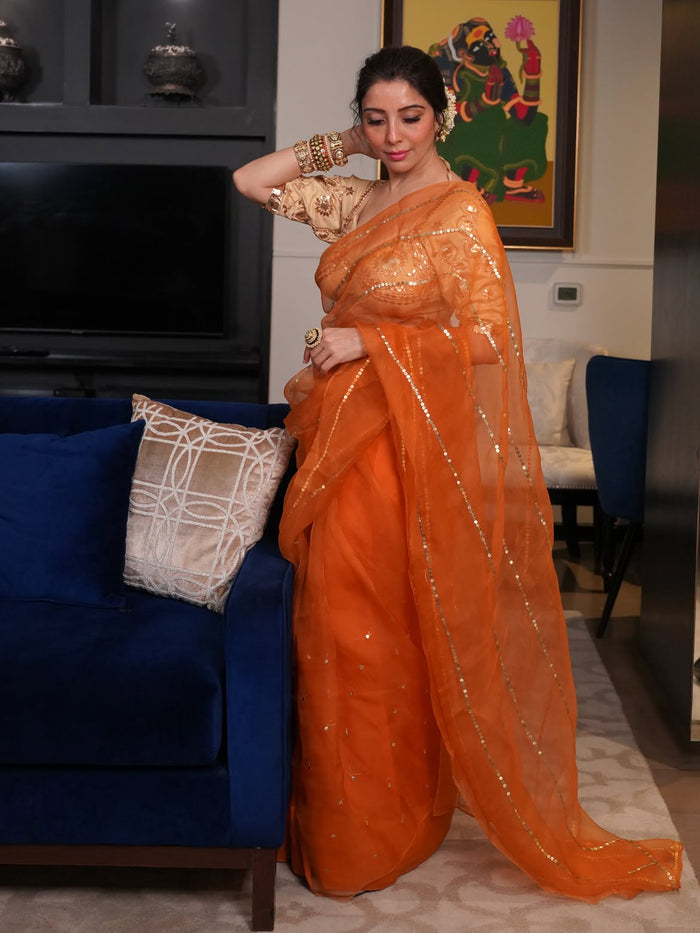
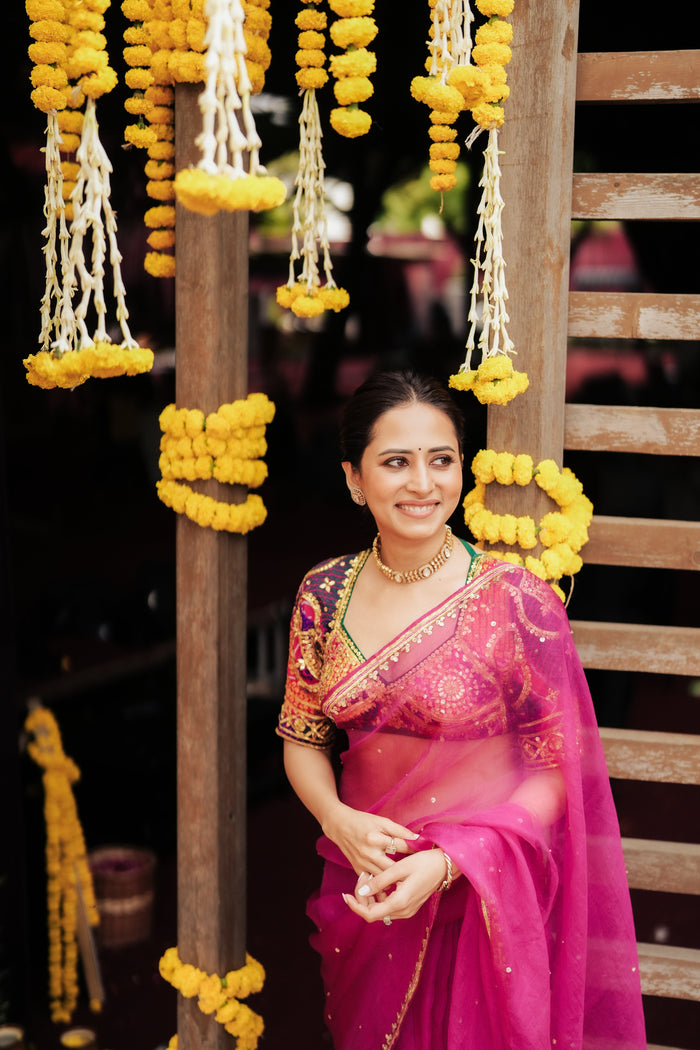
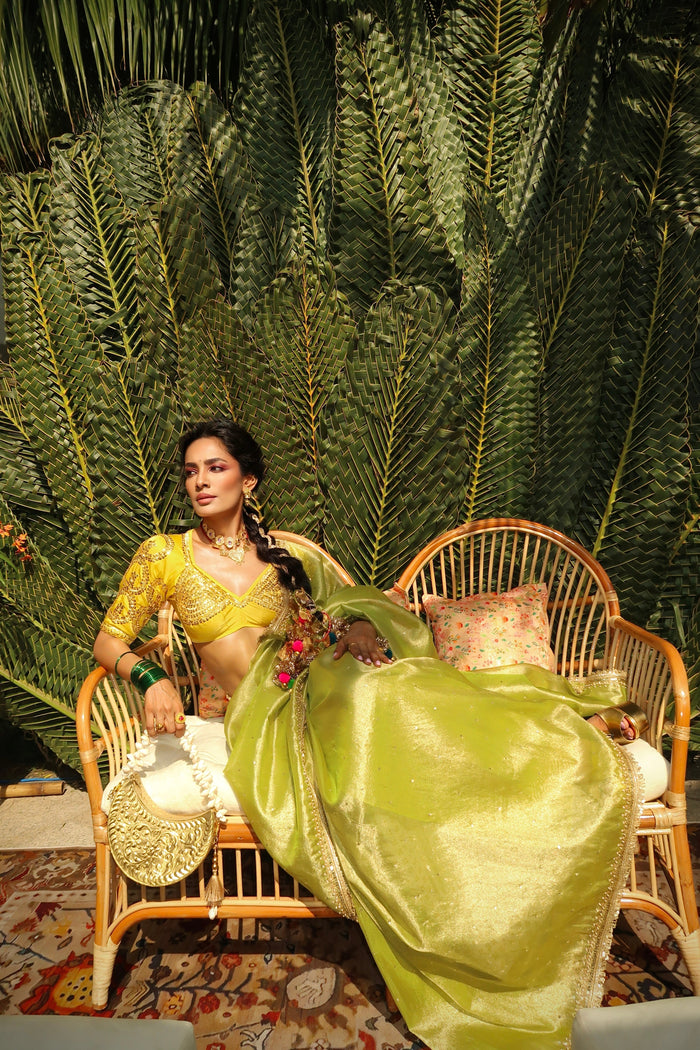
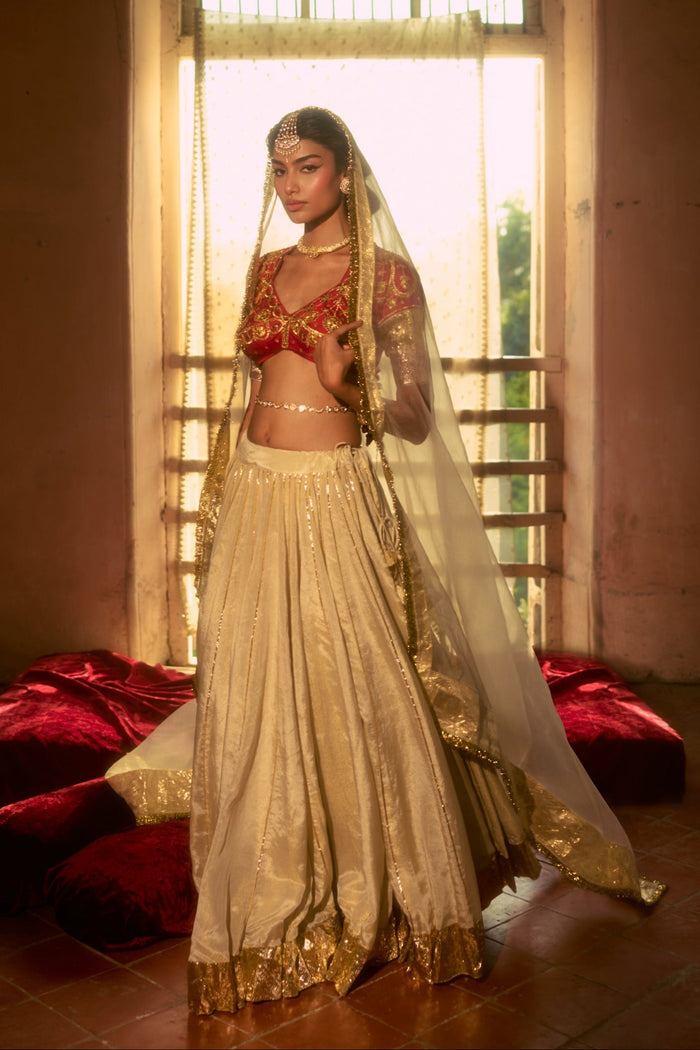
Discover House of Baisa's handcrafted dupattas, made from pure organza and finished with intricate hand embroidery. Each measures 2.5 metres, ready to style with sarees, lehengas and Anarkali suits.


What Is a Lamphi?
- Fabric
- Pure organza
- Length
- 2.5 metres
- Border
- Copper Lamphi Gota
- Details
- Mukaish, Dardoji latkans
- Made in
- Jaipur
Lamphi is the embellished border applied to the edge of a dupatta or garment using pure copper Gota - metallic ribbon — interwoven with real silver Zari.
The word itself is rooted in the craft language of Rajasthan, where Gota Patti work has been practised for centuries.
What makes Lamphi different from a printed or machine-embroidered border is the process behind it. The copper Gota is stamped by hand by local artisans in Jaipur each stamp pressing the metallic ribbon into a specific motif, repeated across the entire length of the border. No two handmade Lamphi borders are perfectly identical, because no two handmade things ever are.
This work was not always available to everyone. In the courts of ancient Rajasthan, Lamphi-bordered garments were worn by royalty. The technique was reserved for those who could afford the artisan hours required to produce it.
What House of Baisa offers is that same craft, made available today - not as a reproduction, but as a continuation of the tradition by the same artisan families who have practised it across generations.
What Is a Daaman?
A Daaman is the embellished hemline or decorative border that finishes the edge of a garment - the detail that distinguishes a completed piece of Indian textile craft from an unfinished one.
On a dupatta, the Daaman is the border work that gives the piece its structure, its weight at the edges, and its defining visual character. Every dupatta in this collection has a Daaman whether that is a Lamphi border of pure copper Gota and silver Zari, a Kiran lace trim, or a combination of both.
The Daaman is not decorative embellishment added to a plain dupatta. It is the reason the dupatta holds its drape, falls correctly, and reads as a finished piece of handcraft rather than a length of fabric.
Pure Organza — Why the Base Fabric Matters
All four dupattas in this collection are made from pure organza silk. Not polyester organza, not a synthetic blend sold as organza, but genuine silk organza with the structural properties that make hand embroidery on it look the way it is supposed to look.
Pure organza has a natural stiffness from the high twist of its silk yarn. On a dupatta, this means the piece holds its drape over the shoulder, across the arms, or pinned to a neckline without constant adjustment. The sheerness of pure organza means the embroidery and Lamphi work appear to float on the fabric rather than sit on top of it. Under any lighting, the handwork catches light from every angle and reads dimensional rather than flat.
Synthetic organza looks similar in a product photograph. In person and in movement, the difference between a pure silk organza dupatta and a synthetic one is immediate in weight, in how it falls, and in how the handwork sits against it.
The Four Dupattas

Sea Green Pure Organza Gota Dupatta
Sea green is one of the more unusual colours in Indian festive fashion, which is precisely why it works. In a room full of red, pink, and orange, a sea green pure organza dupatta reads intentional a considered choice rather than a default one.
The Sea Green dupatta is finished with hand-stitched metal sequins dispersed throughout the fabric. Not printed. Not heat-transferred. Each sequin is stitched individually by hand, which gives the fabric a subtle texture that catches light differently from every angle.
The border is a one-inch pure copper Kiran lace — a fine metallic trim that provides the structural daaman at the edge while adding a distinct metallic accent to the sea green base. 44 inches wide, 2.5 metres long. Available in Deep Red and Deep Pink variants.
Pairs with: Our organza and tissue silk sarees, particularly the Chandani White Organza Saree and the Sohani Green Tissue Hand Embroidered Saree. Also pairs with light-coloured Aangi Saree Sets for festive functions where you want a distinctive layer.

Abhilasha Pure Organza Silk Lamphi Dupatta
Abhilasha means aspiration or longing. This dupatta is named for the quality of reaching toward something and the Lamphi border reflects that ambition. Pure copper Gota with real silver Zari, hand-stamped by artisans in Jaipur, runs along the border of a pure organza silk base. The Mukaish embroidery on the body of the dupatta adds a second layer of handwork fine metallic stitching that produces the characteristic star-like reflective dots that catch light under any condition.
The combination of Lamphi border and Mukaish body embroidery gives the Abhilasha its weight and visual richness. The border structures the drape. The Mukaish disperses light across the full length of the dupatta rather than concentrating embellishment at the edges alone.
This is one of the more formal pieces in the collection suited for wedding functions, reception nights, and occasions where the dupatta is meant to be the most noticed element of the outfit rather than a supporting layer.
Available in Deep Red and Deep Pink.

Vidya Pure Organza Lamphi with Latkan Dupatta
Vidya means knowledge and light. The Vidya dupatta carries its name in how the mukaish work handles light hand-embroidered star-like dots across the pure organza surface, each catching and returning light differently depending on angle and distance.
The Lamphi border runs on two sides of the dupatta, not just one which means the metallic accent of the pure copper Gota and silver Zari frames the dupatta on both long edges. The Dardoji latkans are the third distinct element: handcrafted tassels along the edges, each made individually, which move when the dupatta moves and add a traditional finishing detail that most dupatta designs at any price point have replaced with simpler alternatives.
2.5 metres in length, 44 inches wide. The combination of Lamphi on two sides, Mukaish throughout, and Dardoji latkans at the edges makes this the most traditional and most heavily handcrafted piece in the current collection.
Available in Deep Red, Deep Pink, and Black.

Kadambari Pink Pure Organza Dupatta
Kadambari is one of the oldest Sanskrit words for a story worth telling. This is the entry piece in the collection accessible without being simplified.
The Kadambari is finished with hand-applied copper Gota work and a Kiran lace border that provides the Daaman at the edges. The pink base is the most versatile colour in the collection, it pairs with the widest range of sarees, lehengas, and suits, and reads festive across the full spectrum from daytime functions to evening receptions.
The copper Gota on the Kadambari is the same material as the Lamphi borders on the Abhilasha and Vidya pure copper, not gold-toned synthetic alternatives. The difference is in how the Gota is applied: here it is used more selectively as a border treatment rather than as a full Lamphi running the length of the edge.
Available in Deep Red variant.
What to Pair Your Dupatta With
With a Saree
A dupatta is not the standard pairing for a saree which is exactly why it works as a distinctive styling choice. When the saree itself is a lighter fabric (pure organza, chiffon, georgette), adding an embellished dupatta over the shoulder creates visual depth that the saree's own pallu does not always provide.
With our heavier festive sarees tissue silk, satin Gota sets the organza dupatta reads as a sheer, lighter layer that contrasts with the weight of the saree rather than adding to it. The result is an outfit that has more dimension than the saree alone, without looking overdressed.
With a Lehenga
The dupatta is integral to a complete lehenga look. Most lehenga sets come with a coordinated dupatta in a matching fabric. The dupattas in this collection work differently pure organza against a heavier lehenga fabric creates a contrast between the weight and embellishment of the lehenga and the sheer, light handwork of the dupatta.
For a bridal or wedding function lehenga where the full embellished coordinated dupatta feels too heavy, an organza Lamphi dupatta is a considered alternative. The Lamphi border provides formality. The organza provides lightness.
With an Anarkali Suit
The dupatta completes an Anarkali in a way no other styling element does.
Organza works specifically well with Anarkali because the lightness of the fabric does not add visual weight to a silhouette that already has length and volume. The hand embroidery and Lamphi border on these dupattas pick up the embellishment of the suit without exactly matching it which is always the more interesting choice.
A single-shoulder drape, pinned at the neckline, is the most contemporary approach for Anarkali dupatta styling. The 2.5 metre length gives enough fabric for this drape style with material to spare.
With an Aangi Blouse and Saree
Pairing a House of Baisa Aangi blouse with one of our sarees and adding an organza Lamphi dupatta as a third layer creates the fullest expression of traditional Rajasthani festive fashion. The Aangi's Gota Patti work, the saree's drape, and the dupatta's Lamphi border all share the same craft lineage, which is why they read as a coherent look rather than three pieces assembled independently.
Why House of Baisa for Dupattas Online
House of Baisa started with Aangi blouses. Then Gota Patti sarees. Then lehengas. The dupatta collection begins from the same premise every other category in this brand was built on: real handcraft, real materials, no synthetic substitutes positioned as premium originals.
The Lamphi borders on these dupattas use pure copper Gota and real silver Zari. The Mukaish embroidery is hand-stitched. The Dardoji latkans are handmade.
The base fabric is pure organza silk. These are not descriptions added to justify a price point. They are descriptions of what is actually in the piece.
As the collection grows, every new dupatta added will come from the same standard: artisans in Jaipur, materials sourced for genuine quality, and craft that has enough character to earn the price it is sold at.
How to Care for a Handcrafted Organza Dupatta
Dry clean only. The Lamphi border, Mukaish embroidery, metal sequins, and pure organza base all require dry cleaning. Do not machine wash, hand wash, or soak. Water and agitation damage embroidery threads, affect the Gota border adhesion, and can alter the structure of the organza weave.
Steam to remove wrinkles. Use a handheld steamer held 2 to 3 inches from the surface. Do not press a hot iron directly against the dupatta it can flatten the Gota work and damage the metallic threads in the Mukaish embroidery.
Store flat or loosely rolled. Do not fold tightly at the same point repeatedly organza develops permanent crease marks at persistent fold lines. Store away from friction against embellished garments to protect the border and embroidery work.
Dupatta FAQs
Still unsure about size, fit or delivery? Our stylists reply on WhatsApp within the day.
Ask on WhatsAppWhat is a pure organza dupatta?
A dupatta woven from pure organza silk: light, crisp and slightly sheer, with a soft natural sheen. It holds its shape on the shoulder and drapes cleanly over a lehenga or suit.
What is Mukaish work?
A fine hand embroidery made with thin metal wire, worked into tiny star-like dots across the fabric. It gives a soft, scattered shimmer. See the Abhilasha and Vidya dupattas.
What size are the dupattas?
Every dupatta in this collection is 2.5 metres long and 44 inches wide.
What can I pair these dupattas with?
A lehenga, an Anarkali or a suit, or drape one over a saree for a Rajasthani poshak-style look. They pair especially well with our Aangi blouses.
What is a Lamphi dupatta?
A dupatta finished with a Lamphi border: a wide band of pure copper Gota, hand-stamped with a pattern and hand-applied along the edges. The Abhilasha and Vidya dupattas both have a Lamphi border on two sides.
What are Dardoji latkans?
Handcrafted tassels added along the edges of a dupatta. The Vidya dupatta is finished with them.
Is the Gota real copper?
On the Sea Green, Abhilasha and Kadambari dupattas, the Gota, Lamphi and Kiran lace are pure copper, which keeps its shine far longer than plastic Gota. Each product page names the work used.
How do I care for an organza dupatta?
Dry clean only. Iron on the reverse at a low setting with a cloth in between, never directly on Gota or sequins. Store folded in muslin, away from damp and perfume.